Bird Photography Gear I Actually Use
My practical upgrade path from first serious bird photos to the setup I carry today — cameras, lenses, carry systems, and the tradeoffs that actually matter in the field.
Table of Contents
My Top Pick
If someone asked me today where to start bird photography, I’d recommend the Canon R7 paired with the RF 100–400mm. That is exactly how I got serious about bird photography, and even after upgrading, it is still the combination I recommend most often.
It gives you incredible autofocus, excellent reach, manageable weight, and plenty of room to grow before you will ever feel like the camera is holding you back. For most people, this is the sweet spot between approachable and powerful.
Canon R7

Canon RF 100–400mm f/5.6–8 IS USM

Amazon Affiliate Disclosure
Every quest needs gear—and when you shop through our links, you help keep the adventure alive.
As an Amazon Associate, FeatherQuest earns from qualifying purchases.
My Camera Upgrade Timeline
Apr 2022
I started bird photography with our old Canon Rebel XSi and EF-S 55–250mm — gear we already owned from 2008.
Jun 2022
I pre-ordered the Canon R7 and got it on day one, paired with the RF 100–400mm. This is where bird photography really clicked for me.
Apr 2023
After about a year, I knew I was serious. Before Alaska, I upgraded to the RF 100–500mm for more reach, detail, and L-series confidence.
Dec 2025
I moved to the Canon R5 II for stronger autofocus, full-frame flexibility, a better viewfinder, and a higher ceiling for video.
Buy a Cotton Carrier Early
If there is one accessory I would buy as soon as possible, it is a Cotton Carrier. Carrying a camera on your neck or in your hands gets old fast. A good carry system keeps the weight off your neck, keeps your hands free, and keeps the camera instantly accessible when a bird suddenly appears.
I chose the belt because I like having the weight and camera at my hip while I hike and move through the field. The chest harness works great too, especially if you prefer the camera centered on your body, want it closer while sitting, or spend a lot of time getting in and out of a car.
The point is not belt vs. harness. The point is that your camera needs to be comfortable enough that you actually carry it and ready enough that you do not miss the moment.
Cotton Carrier Sling Belt

Cotton Carrier Chest Harness


The Lens Upgrade: RF 100–500mm
The RF 100–400 was not a mistake or a toy lens. It was the right place to start. But after about a year with that setup, I could tell bird photography had become more than a passing interest. I was serious about this new hobby, and with an Alaska trip coming up, I wanted the extra reach, sharper pixel-level detail, weather sealing, and confidence that came with Canon’s L-series glass.
That is where the RF 100–500 became my workhorse. It is still portable enough for my one-camera, one-lens approach, but it gives me the image quality and flexibility I want for everyday birding, travel, family trips, and serious photo outings.

The Camera Upgrade: Canon R5 II
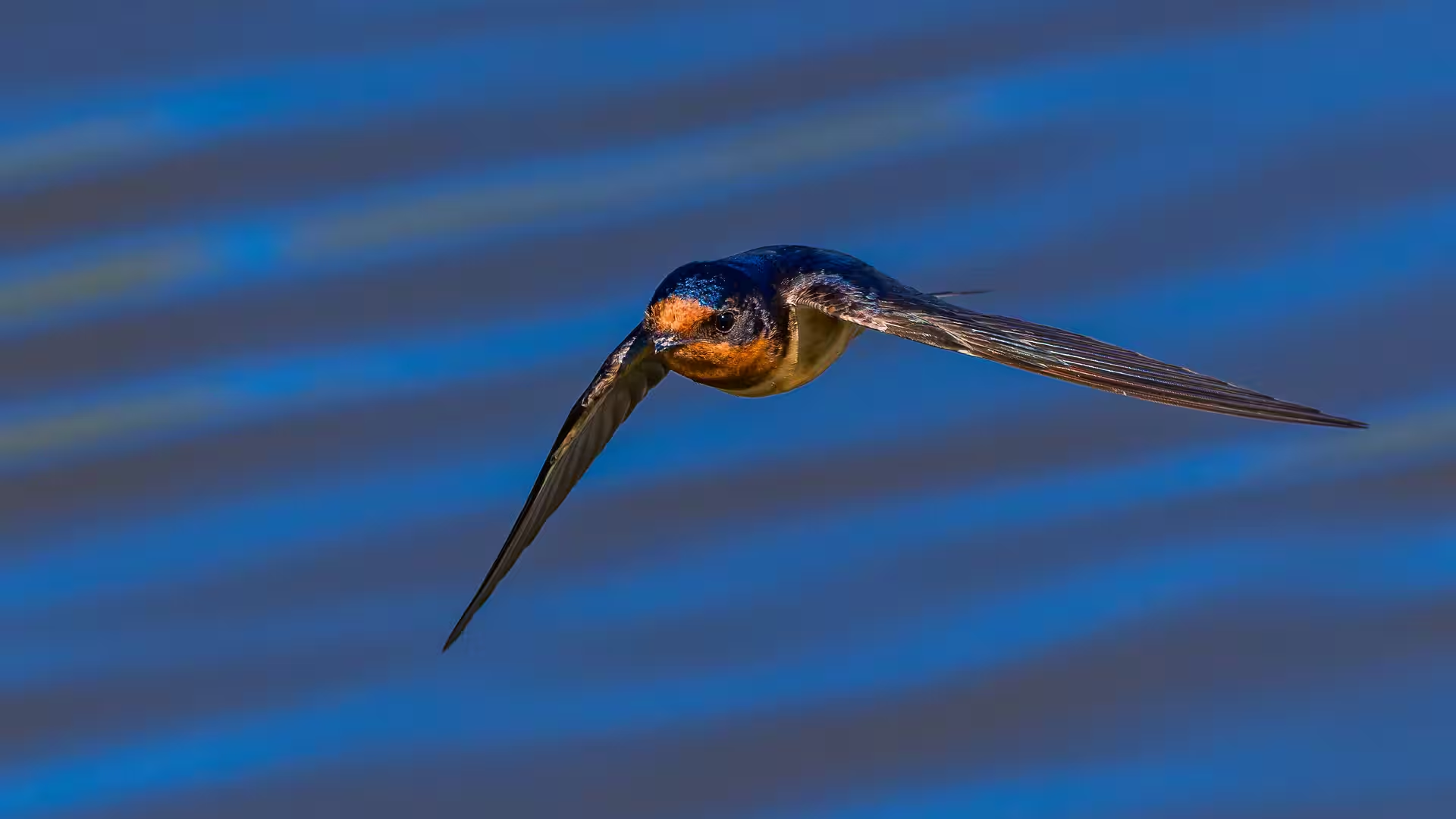
I did not move on from the R7 because it was bad. I moved on because my skill level and the kinds of birds I wanted to photograph started asking for more — especially with fast, unpredictable subjects like swifts, swallows, and hummingbirds.
Pre-capture was one reason I upgraded, along with faster autofocus, but I want to be honest: I have not fully loved pre-capture yet. Out of the box, it was frustrating to toggle through the menu, and every time I used it I had to clean up three to five times more photos afterward. Canon’s newer firmware controls should make it much more practical, so I am still excited about its potential.
I do sometimes miss the reach of the R7. A crop sensor makes distant birds feel closer in a way that is hard to ignore. But the extra megapixels on the R5 II give me room to crop aggressively in post, and the full-frame sensor is a real advantage when a bird gets close. Instead of backing up or zooming out, I can keep the lens at 500mm, fill the frame, capture more pixels on the subject, and get deeper background blur.
The unexpected bonus has been the bigger viewfinder and wider view of the scene. It is genuinely a joy to look through, and seeing more around the bird helps with swallows, fast-moving subjects, and habitat-style images. It has also pushed me toward more hero images for FeatherQuest, with more flexibility for cropping. Video is another area where I can already tell the R5 II has a much higher ceiling than the R7 — and I still have a lot to learn there.

Should You Buy a Superzoom First?
There is one big exception to my R7 recommendation: size. If your main goal is carrying the smallest, simplest camera possible, a superzoom or compact point-and-shoot can still make sense.
The tough part is that Canon discontinued the PowerShot SX70 HS, which is the kind of camera I wish still had a modern successor. You can look at options like the Panasonic LUMIX FZ80D or Nikon COOLPIX P950 if you want a true superzoom, and if portability matters more than reach, the Canon PowerShot SX740 is probably the more natural compact option.
But once you are spending real money on a superzoom, the decision gets harder. Unless your primary reason for buying one is size, weight, or simplicity, I would personally put that money toward the R7 system instead. You will get a setup that grows with you instead of one you may outgrow quickly.
Panasonic LUMIX FZ80D

Nikon COOLPIX P950

Canon PowerShot SX740 HS

What About the RF 200–800mm?
The Canon RF 200–800mm is probably one of the lenses I get asked about most, and I understand why. A lot of bird photographers love it. The extra reach is real, and for distant birds, shorebirds, raptors, and open landscapes, it can make a lot of sense.
The reason I do not personally use it comes back to my one-camera, one-lens mentality. The RF 100–500 gives me more flexibility for nearby birds, mammals, family moments, landscapes, and travel. The RF 200–800 is tempting, but for the way I bird, I would rather have versatility than maximum reach.
There are tradeoffs too. The 200–800 gives you more reach, but it is not an L-series pro lens, so you give up some of the quality and refinement of the RF 100–500. You also lose a stop of aperture on the long end, and the lens is a little heavier.
That does not make it a bad choice. It just makes it a different choice. If your birding is mostly distance-based and you are comfortable carrying the extra size, it may be a great fit. If Canon ever releases a pro-series version of this lens, though, that would definitely get my attention.

The Dream Lens
The Canon 600mm f/4 is the dream lens for a reason. The light gathering, subject separation, reach, and image quality are all incredible. If I were photographing one target from a blind or working in a professional setting, this is the kind of lens that would be hard to ignore.
But for how I actually bird, it brings complications. It is expensive, heavy, specialized, and it breaks the simple photography philosophy I have slowly developed: one camera, one lens. I like walking out the door with one setup and knowing I am ready for almost anything.
So yes, it is still the dream. But it is a dream with tradeoffs.

Start Where You Can
Do not let the price of your dream setup stop you from starting. Bird photography gets expensive fast, but you do not need a pro body and a giant lens before you can learn, explore, and make photos you are excited about.
Start where you can. Use an older camera, buy a used setup, borrow gear, or choose the lens that fits your budget right now. The most important thing is getting outside enough to learn what you actually enjoy photographing and what is truly limiting you.
The other thing I did not appreciate early on is how healthy the used camera market is. I have used both eBay and local online classifieds to sell older gear, and both were straightforward ways to turn previous gear into upgrade money. If you take care of your equipment, you are rarely starting over from zero.
You do not have to buy your forever setup on day one. Start with gear that gets you outside, build skill, learn your real limits, and upgrade only when the next step actually makes sense.
Other Accessories I Actually Use
Once the camera, lens, and carry system are handled, these are the smaller pieces of gear that quietly make bird photography easier: faster cards, safe cleaning tools, a simple support option, and a way to enjoy the photos after the trip is over.
Kingston Canvas React Plus 128GB

Altura Photo Cleaning Kit

Sirui P-326 Monopod

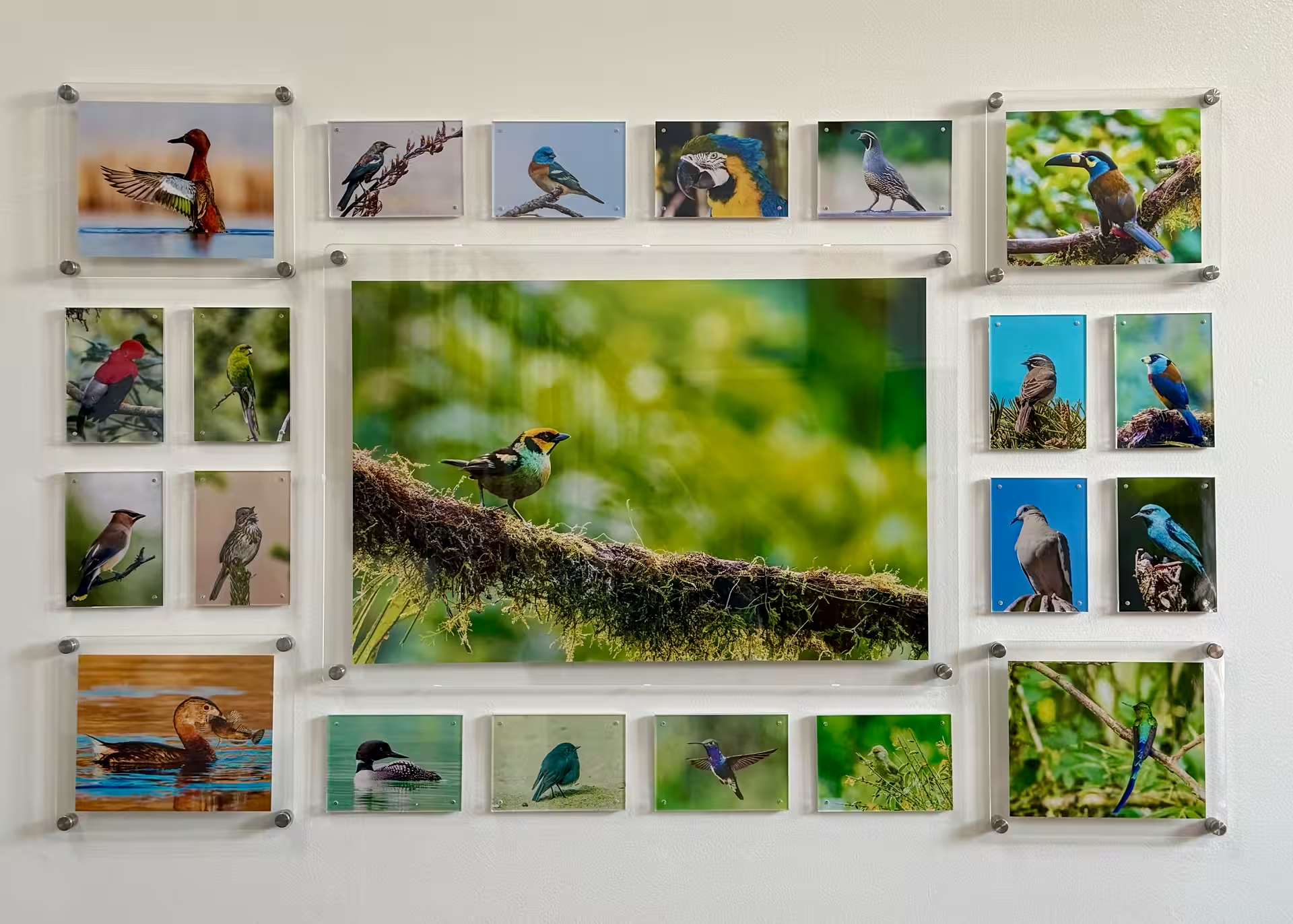
Bird Gallery Wall