

Provo Library Field Trip
Field Trip Recap • June 20, 2026
Quest Overview
30-plus people joined FeatherQuest and the Provo City Library at Rock Canyon A hidden hummingbird nest became the surprise highlight of the morning Erika from the Provo City Library started the day with a Black-headed Grosbeak lifer
Table of Contents
Quest Log
Rock Canyon was a very different kind of Provo Library field trip from our spring walk at the Provo River Delta. The terrain was steeper, the birds were smaller, and many of the best sightings required listening carefully, scanning the oak brush, and waiting for quick flashes of movement.
That challenge ended up being part of the fun. More than 30 people joined us for the walk, including families with kids, BYU students, young couples, retired couples, and participants from all walks of life. It felt less like checking birds off a list and more like sharing an adventure through the canyon.
We also had a location-specific FeatherQuest target guide for the morning. You can download it here and try the same Rock Canyon bird quest on your own: Rock Canyon Field Trip Guide (PDF).

Early Discoveries
We arrived a little early and met up with our Provo City Library host, Erika, who was already out spotting birds. She showed us the first bird of the day: a Black-headed Grosbeak. Even better, it was a lifer for her, which made it a perfect way to begin the morning.
A few Lesser Goldfinches followed, and I caught a Western Kingbird flying across the sky as the rest of the group began to arrive. Once everyone had gathered, we did a quick introduction, shared a few binocular tips, gave a quick shout-out to the Merlin Bird ID app, and headed up the trail.
It did not take long before one of our target birds announced itself. A Spotted Towhee called from the distance, then moved from ground foraging to an open perch where the group could get a clean look.
Moments later I heard a faint, high-pitched squeak: Blue-gray Gnatcatcher. The tiny bird flashed right in front of the group, only a few feet away, before slipping deeper into the brush. A Black-headed Grosbeak buzzed by soon after, flashing orange, black, and white as it perched briefly off to the side. As the rest of the group caught up, we played a little peek-a-boo with the gnatcatcher before continuing up the canyon.

The Spring-fed Fountain and the Hidden Nest
As we continued up the path, we heard buntings and warblers singing from the oaks, though many stayed hidden in the leaves. I paused briefly and called for Canyon Wren, but with a large group moving up the trail, I did not wait long. Our target turnaround was the drinking fountain — a literal spring-fed fountain with cool, fresh water flowing out of the canyon.
Stacy helped keep the group connected through the walk, moving through the middle with our little speaker so the bird facts and directions could reach more than just the people at the front. At the fountain, she was also the first to get eyes on the Lazuli Bunting, giving the group one of the clearest colorful songbird moments of the morning.
While we waited for everyone to catch up, a Red-breasted Nuthatch honked somewhere in the background. Then the rest of the group arrived with exciting news: they had seen the Canyon Wren while coming up the trail.
The biggest surprise came moments later when one of our participants found a tiny hummingbird nest tucked into the branches, complete with a baby hummingbird inside while the parents busily buzzed above. Everyone took turns getting a careful look, and it quickly became one of the defining memories of the trip.

The Slow Walk Back
After the nest, the group began to slowly disperse. Some families headed back, while a smaller group continued at a slower pace. That slower walk ended up paying off.
With fewer people to keep moving, we took our time and found the Canyon Wrens again. A very cooperative Black-capped Chickadee joined the party, and a Northern Flicker appeared along the rocks. Overhead, Common Ravens and a Turkey Vulture soared high above the canyon.
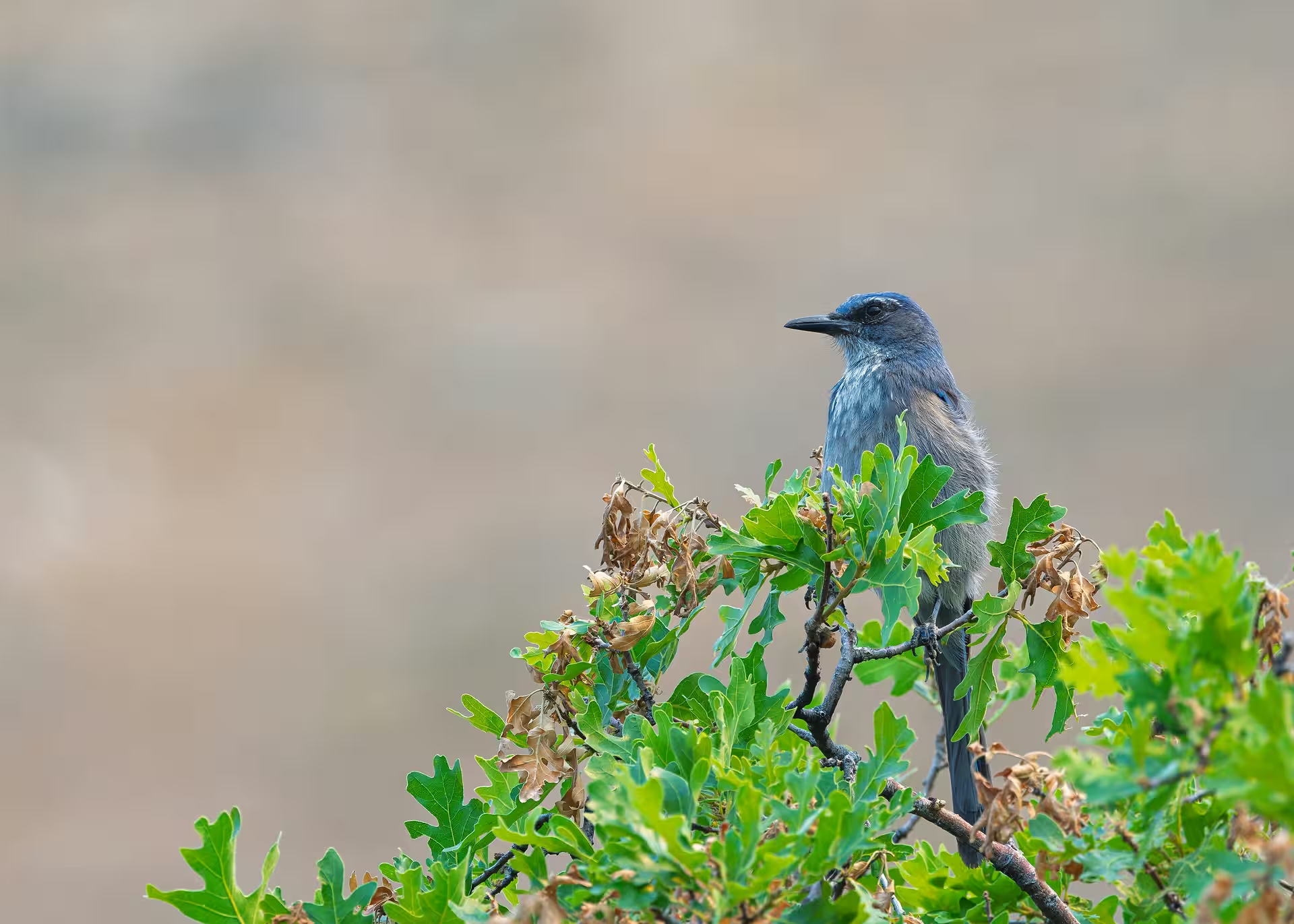
As we continued down, more Black-chinned Hummingbirds and Lazuli Buntings appeared, along with two beautiful Western Tanagers. We also picked up better views of the Spotted Towhee and Blue-gray Gnatcatcher, and a Woodhouse's Scrub-Jay greeted us near the base of the canyon.

Community on the Trail
As always, some of the best parts of the morning happened in side conversations along the trail. While I was sharing bird facts, field marks, and little observations over my daughter's karaoke machine, participants were asking questions, comparing what they noticed, and helping each other find birds.
On the walk back I had a great conversation with a BYU pre-med student who shared stories about helping with official bird studies in her hometown in Washington state, including research on whether airplane sounds might affect birds. That kind of curiosity fit the morning perfectly.
That may be what I loved most about this field trip. Yes, we found great birds. But we also had families, kids, students, couples, older participants, first-time birders, and experienced observers all slowing down together to notice one canyon. That is exactly what FeatherQuest is about.

Trip Photo Highlights


More Than a Species List
The Provo River Delta field trip showed how accessible birding can be when large wetland birds are easy to see. Rock Canyon showed a different side of the same idea: birding can also be a real adventure, where songs, movement, habitat, and patience all matter.
We did not see every target bird, and not every bird posed perfectly. That is part of the point. We listened for warblers in the oaks, chased gnatcatchers through the brush, watched hummingbirds tending a nest, and celebrated every moment the canyon gave us.
For me, the best measure of the morning was not simply the species list. It was seeing people of all ages helping each other notice more than they would have seen alone.