
Birding Alta
Field Trip Recap • September 24, 2026
Quest Overview
A Private FeatherQuest Walkabout During Wave Summit Ten Species on the Afternoon Walk Steller’s Jays and Clark’s Nutcrackers at the Finish
Table of Contents
A FeatherQuest Walkabout at Wave Summit
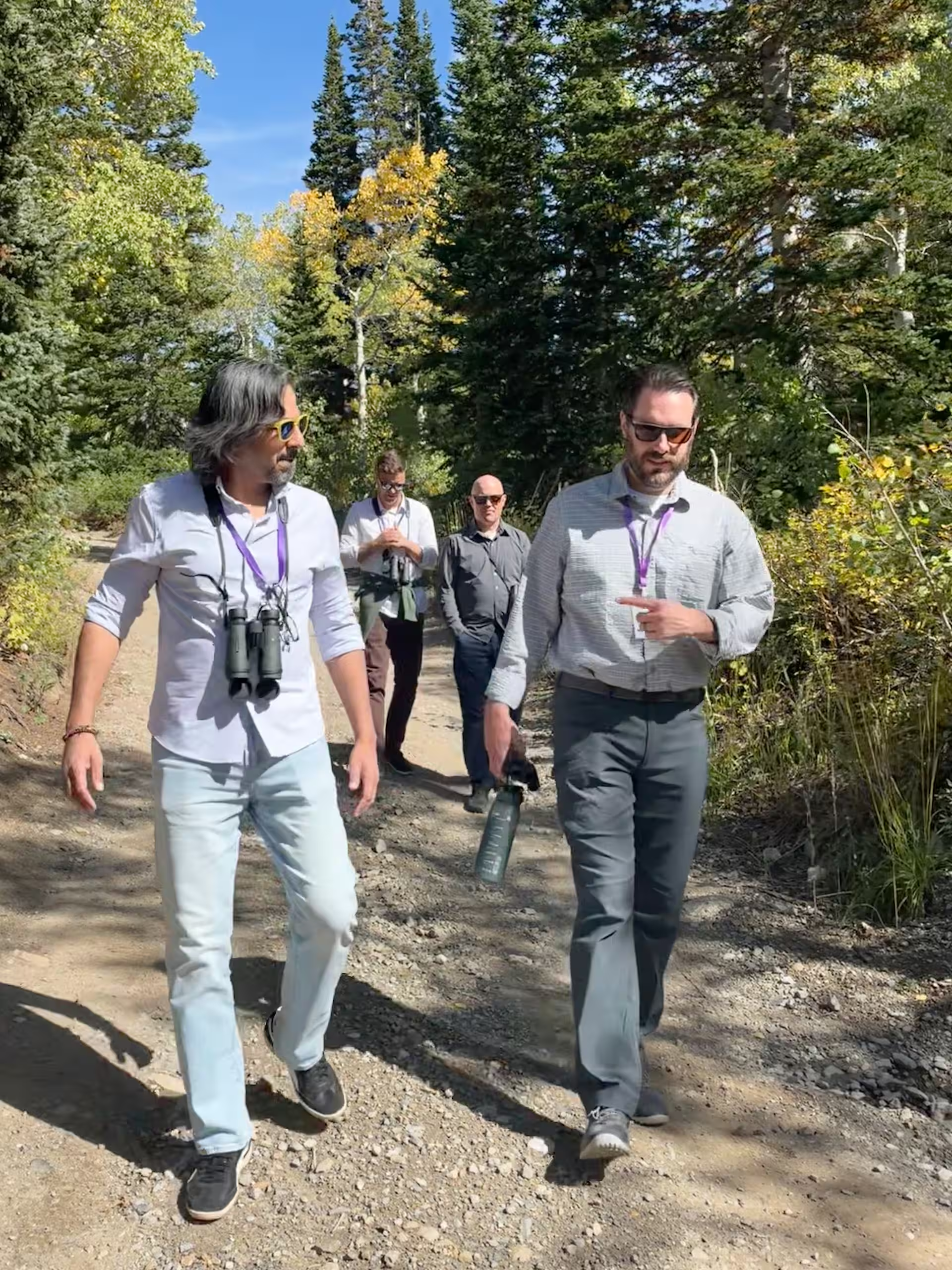
FeatherQuest headed to Alta for a private birding walkabout during Wave Summit. Four guests joined me for an afternoon in the mountains with binoculars, FeatherQuest books, and a custom field guide featuring ten birds we hoped to find.
Thanks to SpringTide for making FeatherQuest part of the Wave Summit experience at Alta. With hiking, photography, spa time, and birding among the afternoon options, we headed into the mountains to see what we could find. We still managed to talk about work along the trail — apparently binoculars only provide so much protection from conference conversation. 😂
Before we started, we spent a few minutes with the binoculars and practiced Look → Lock → Lift: find the bird with your eyes, lock onto its exact location, then bring the binoculars up without looking away. Tiny birds moving through dense aspens would give us plenty of chances to practice.
Ten Birds to Look For
Our Alta guide featured seven Common Finds: Clark’s Nutcracker, Steller’s Jay, Mountain Chickadee, Dark-eyed Junco, Northern Flicker, Red-breasted Nuthatch, and Cassin’s Finch. Hairy Woodpecker, Ruby-crowned Kinglet, and Golden Eagle rounded out the list as our three Uncommon Gems.
The idea was never to check every box. Ten birds gave us something to look for while leaving plenty of room for whatever Alta decided to show us.

A Very Birdy Morning
I walked the route that morning to see what we might encounter. The answer, apparently, was birds everywhere. In just over an hour I recorded nine species and 39 individuals.
Mountain Chickadees called through the trees, Yellow-rumped Warblers moved through the aspens, and a flock of at least 20 Dark-eyed Juncos kept hopping and flushing ahead of me along the road. Their flashing white outer tail feathers made them surprisingly easy to follow whenever they moved.
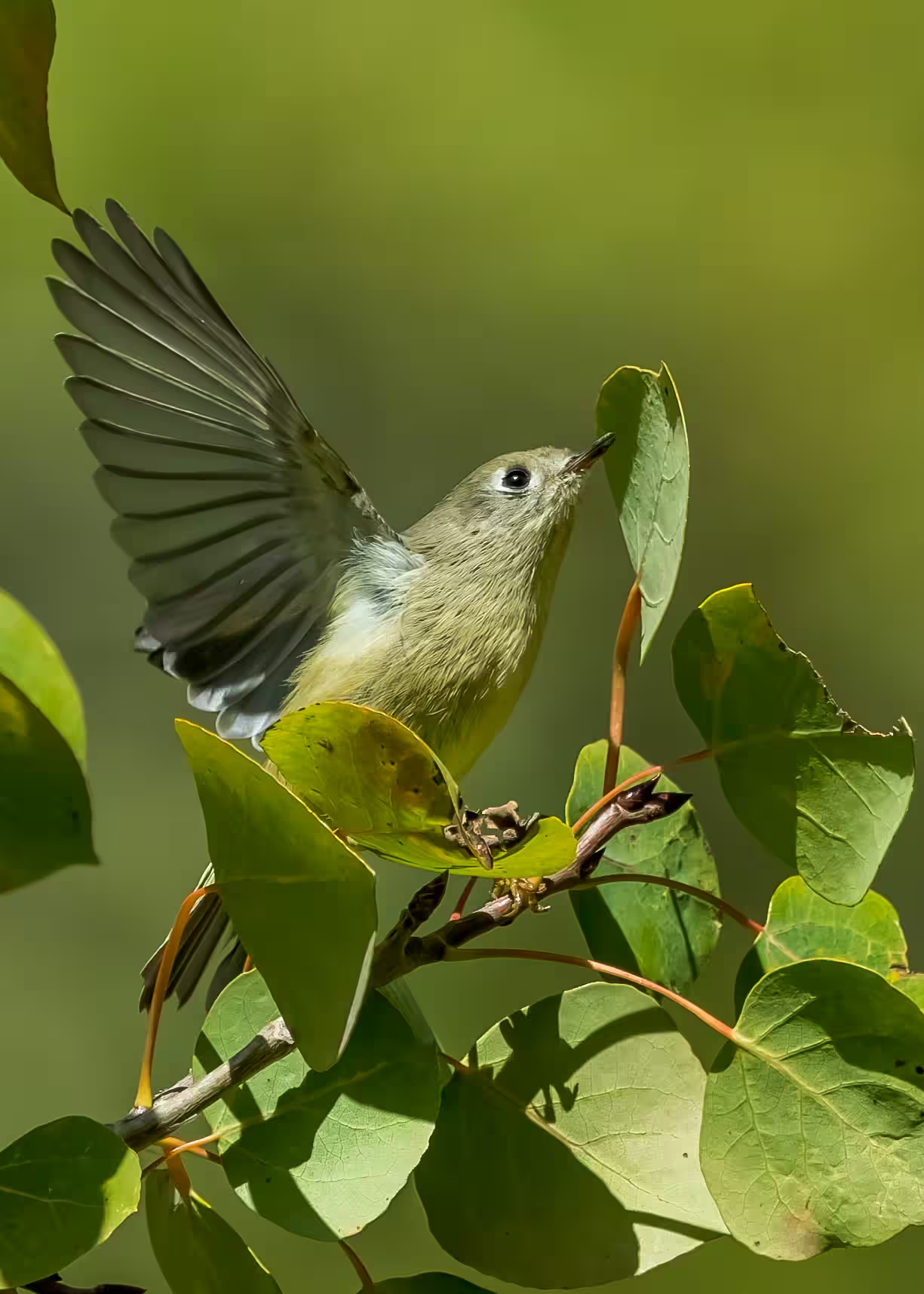
Then there were the Ruby-crowned Kinglets. I had put them under Uncommon Gems on the field guide. I found five during the morning scout. So much for that. 😂
The First Bird Was a Mystery
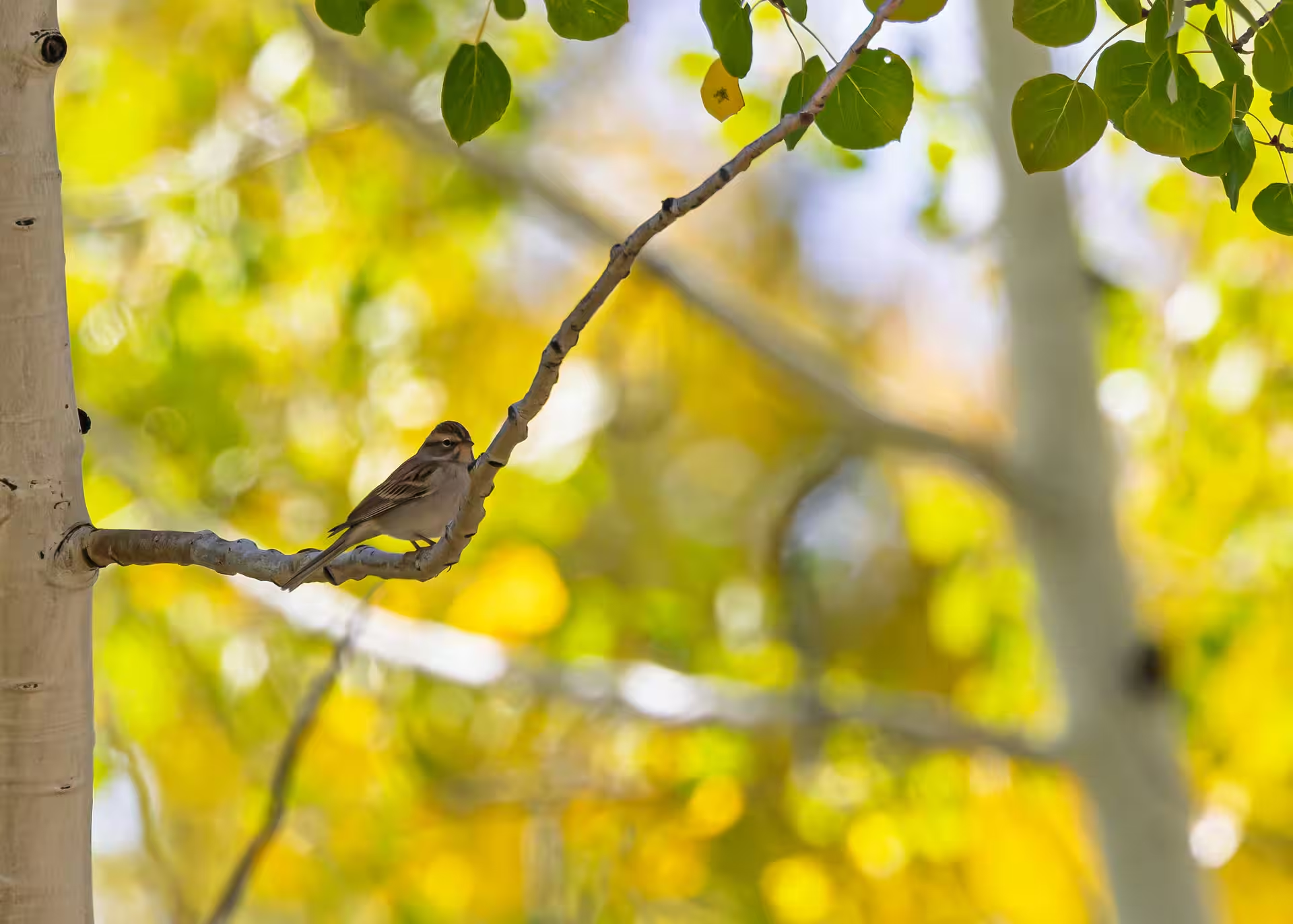
The afternoon started with a little puzzle. Almost immediately we heard a sparrow and got a dark, brief look at it in the trees. Chipping Sparrow sounded right, but the light was poor and there was not enough of a view to be completely comfortable with the identification in the moment.
The camera had seen a little more than we had. When I processed the photographs afterward and pulled the shadows back, there it was: a Chipping Sparrow. Our first bird of the walk had been hiding in the files the whole time.
Where Do the Birds Go?
One of the questions along the trail was what happens to birds when winter arrives. Do they hibernate? For most of the birds we were talking about, the answer led us into migration — and into one of the reasons September can be such an interesting time to bird.
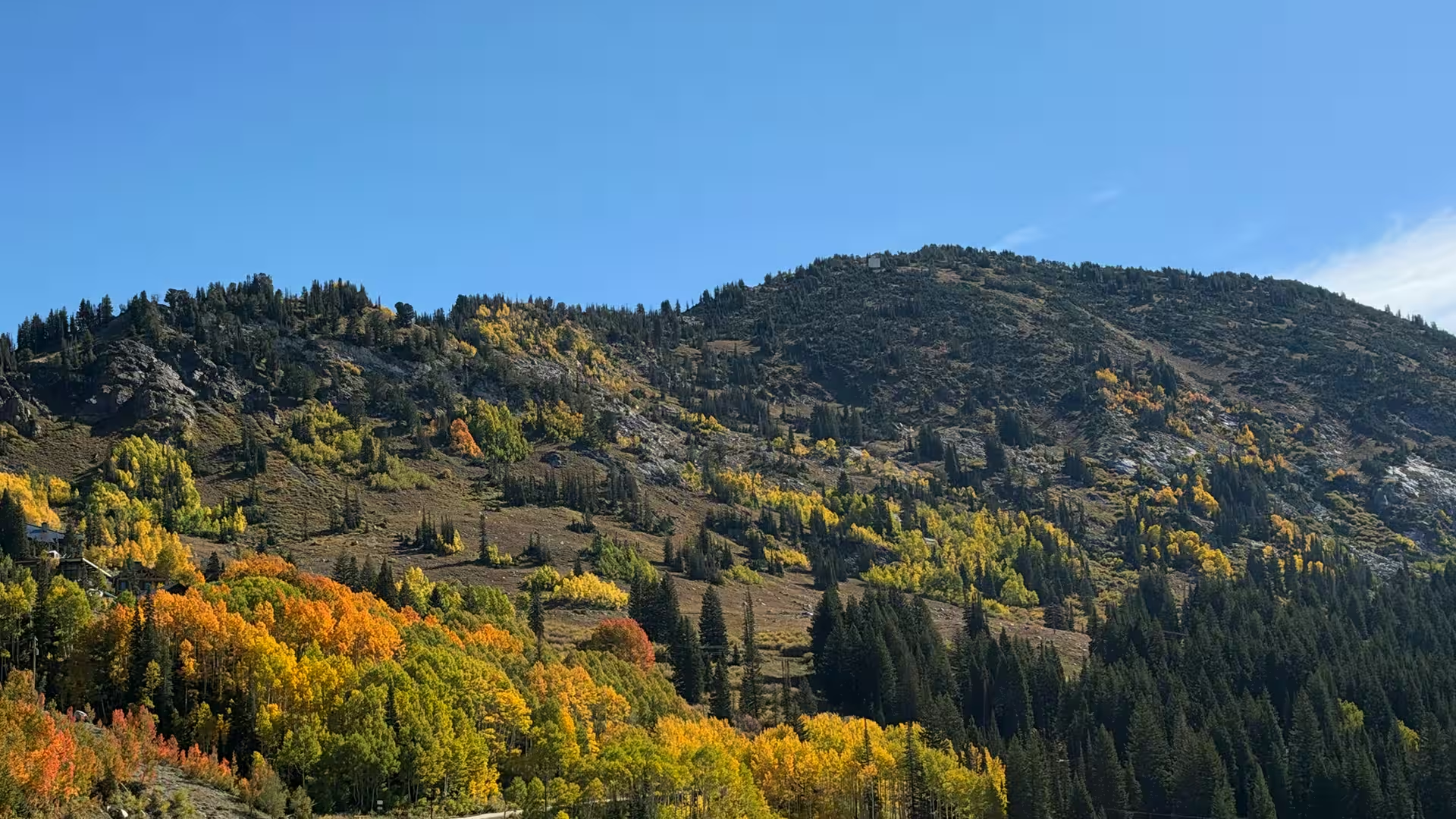
Birds are moving. Some travel enormous distances across the world. Others simply shift between seasonal ranges or change elevation. That can make a September outing strangely quiet when the birds that were here have already moved on and the next wave has not arrived. It can also put a bird in front of you that you had no business expecting. That uncertainty is part of why migration season is so much fun.
Where Is the Ruby Crown?
We found another Ruby-crowned Kinglet during the afternoon, which raised an obvious question: where exactly is the ruby crown?
Male Ruby-crowned Kinglets normally keep those red crown feathers concealed. When they become excited or are displaying, the feathers can rise into a brilliant flash of red. That led us into bird courtship and breeding behavior — including the less romantic reality that in some species a pair may come together, raise the next generation, and then essentially say, ‘Great, see you next year,’ before going their separate ways. 😂


Want to Find Birds? Find the Food.
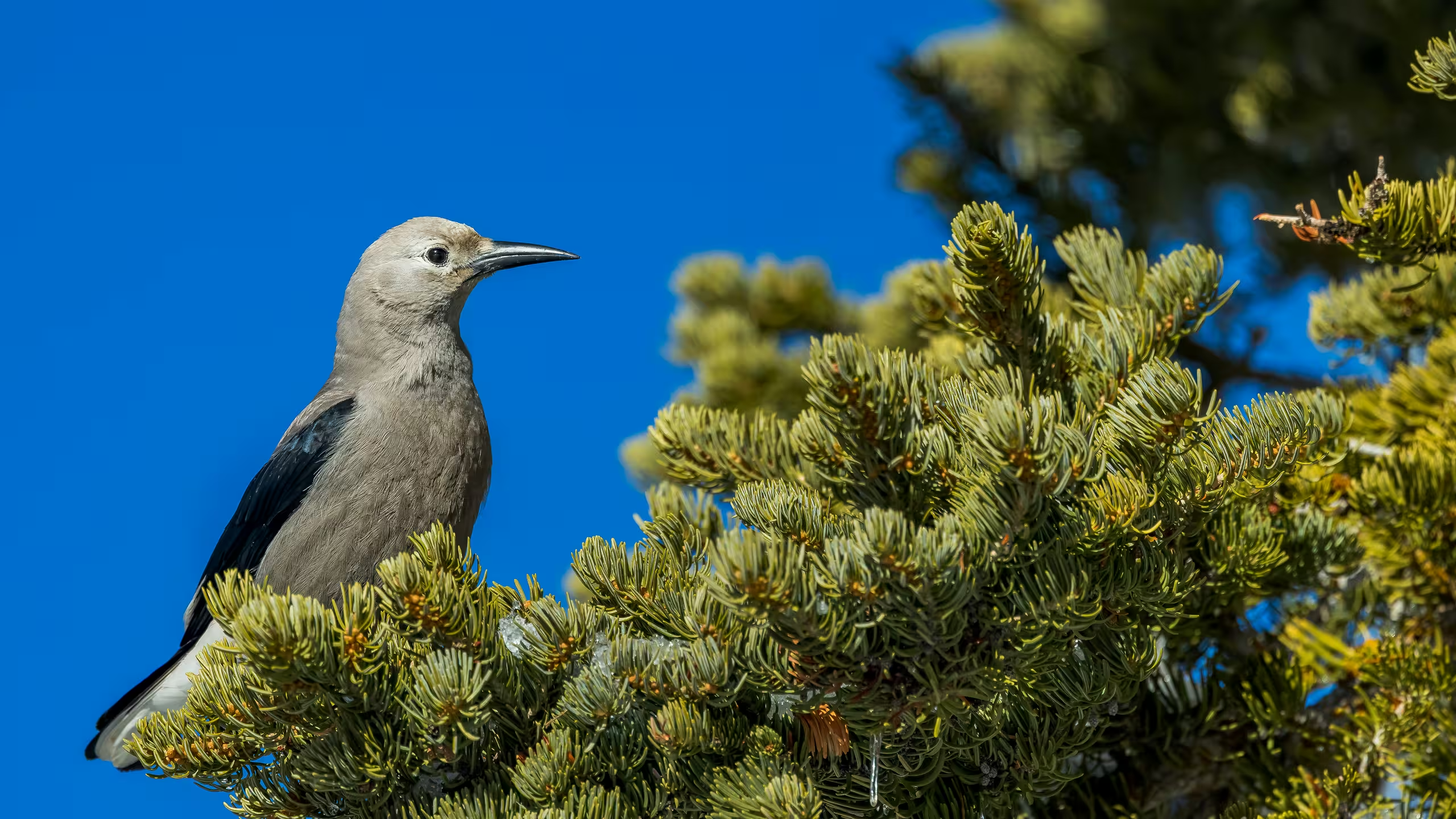
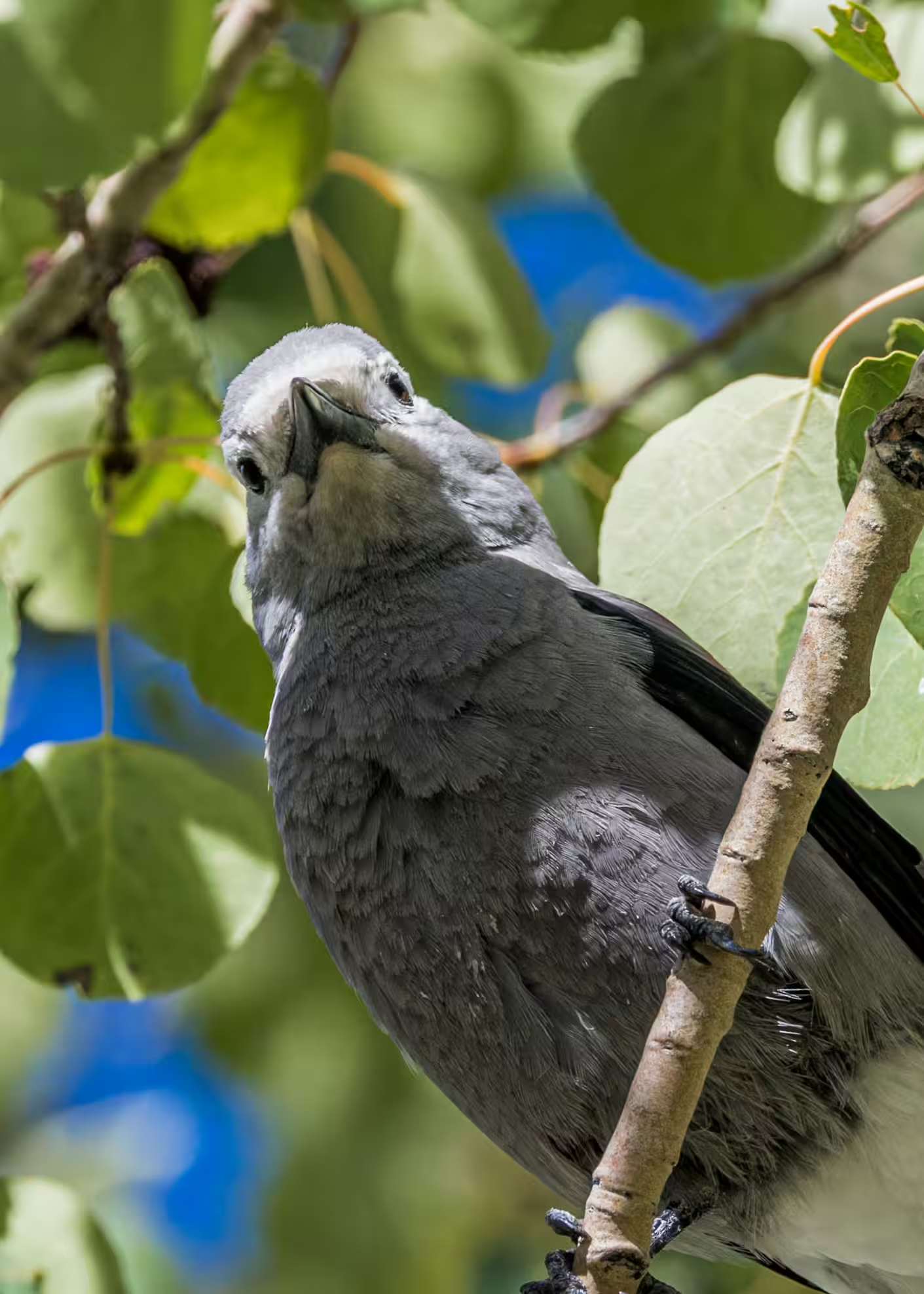
The afternoon had been quieter than my morning scout, but I had deliberately saved one promising stop for the end: the feeders. It paid off almost immediately with three Clark’s Nutcrackers giving everyone long, close looks.
They may have solved a mystery from earlier in the walk too. We had watched a larger bird fly high across the distance, looking almost black except for a bold flash of white around the tail. Now, with Nutcrackers right in front of us, the combination of dark wings and white tail markings looked awfully familiar. We will never know for certain, but we had a pretty good suspect.
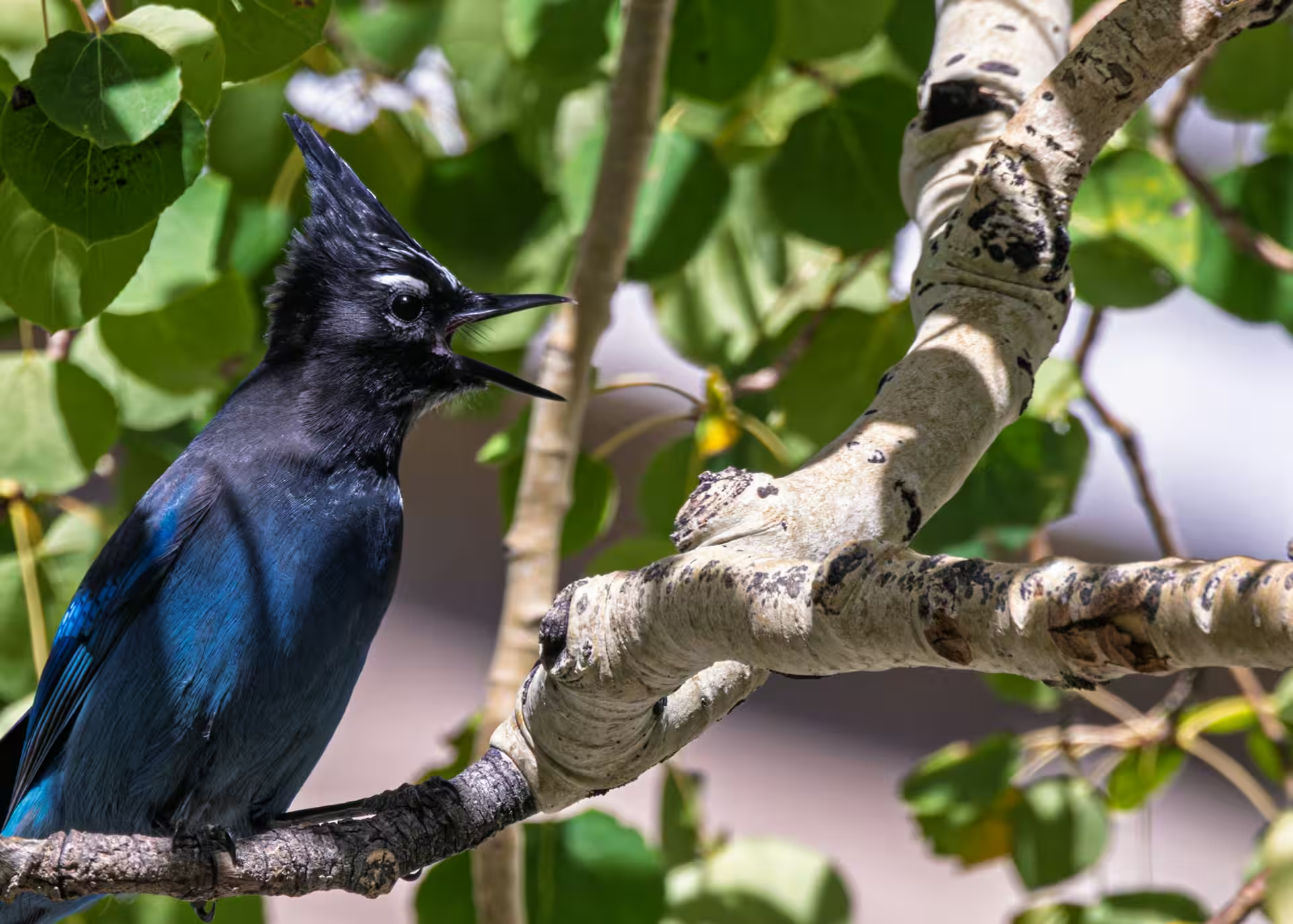
A Steller’s Jay joined the action in the aspens, giving us another of the mountain birds I had really hoped everyone would see. It was about as good a finish as we could have asked for — and a perfect final birding lesson: want to find birds? Go where the food is. :)
Come Back in Winter
If you are visiting Alta during this part of the year, especially from back East, I would put three birds near the top of the list: Mountain Chickadee, Steller’s Jay, and Clark’s Nutcracker. We found all three during our day in the mountains.
Come back in winter and my Alta Big Three becomes a Big Five. Rosy-finches descend from their high-elevation world and add two more mountain specialties worth seeking. I told the group about one of my own lucky encounters, when I stumbled onto researchers capturing and measuring rosy-finches.
That encounter became its own FeatherQuest, including details for finding the spot yourself. If winter brings you back to Alta, see if you can find the other two members of the Big Five.